Bajaj Pulsar 180 vs TVS Apache RTR 180: Which One Should You Buy?
By 91motorsMay 14, 2026
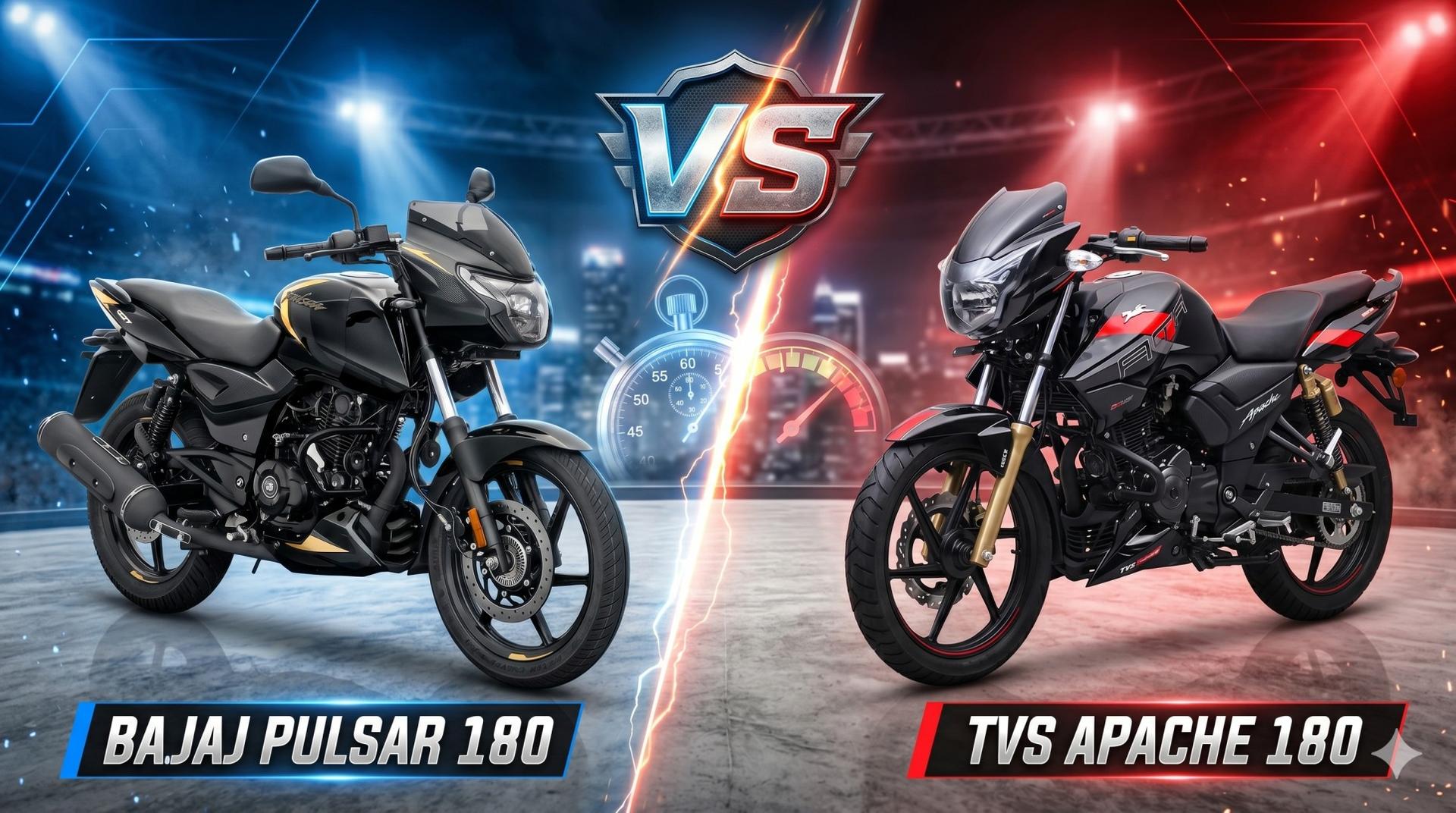
Picture this: it's 2001. Bajaj launches the Pulsar 180, and suddenly every college boy in India forgets about food, sleep, and possibly even exams. The motorcycle that arguably invented the concept of "affordable performance" in India had arrived — and it brought thunder. Fast forward to today, and its most persistent nemesis, the TVS Apache RTR 180, is still standing across the road, arms crossed, refusing to back down.
Two legends. One segment. Zero agreement — especially at every Indian tea stall, office parking lot, and family WhatsApp group. So we've decided to settle this once and for all in the most thorough, SEO-optimised, and slightly ridiculous way possible: a proper Bajaj Pulsar 180 vs TVS Apache RTR 180 comparison. Helmets on. Let's go.

Bajaj Pulsar 180 vs TVS Apache RTR 180: The Specs Showdown
Before we get into feelings, loyalties, and arguments that have ended friendships, let's look at the cold, hard numbers. Numbers don't have egos — unlike some of the riders of these bikes.
| Specification | Bajaj Pulsar 180 | TVS Apache RTR 180 |
|---|---|---|
| Engine | 178.61 cc, Air-Cooled | 177.4 cc, Oil-Cooled |
| Max Power | 17 PS @ 8,500 rpm | 17.03 PS @ 9,000 rpm |
| Max Torque | 15 Nm @ 6,500 rpm | 15.5 Nm @ 7,000 rpm |
| Top Speed | ~113 km/h | ~114 km/h |
| Gearbox | 5-Speed | 5-Speed |
| Kerb Weight | 156 kg | 140 kg |
| Fuel Tank | 15 Litres | 12 Litres |
| Claimed Mileage | ~45 kmpl | 45 kmpl |
| ABS | Single-Channel | Single-Channel Super Moto ABS |
| Ride Modes | ❌ None | ✅ Urban, Rain, Sport |
| Bluetooth / App | ❌ No | ✅ SmartXonnect |
| Glide Through Traffic | ❌ No | ✅ Yes (GTT) |
| Ground Clearance | 165 mm | 180 mm |
| Ex-Showroom Price | ₹1,22,490 | ₹1,26,987 onwards |
At first glance, the numbers are almost suspiciously similar — like two siblings who insist they're completely different people but clearly share the same DNA, the same arguing style, and the same tendency to rev unnecessarily at traffic signals.
Design & Styling: Old Soul vs Racer Boy
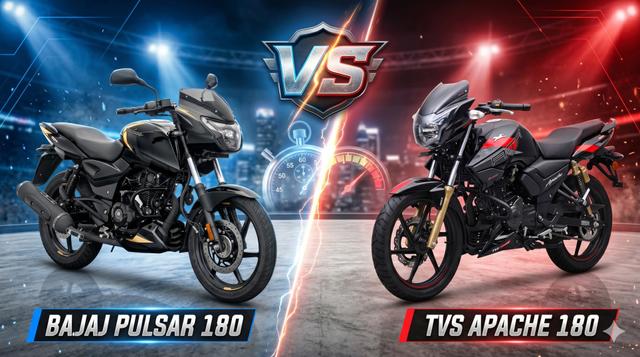
The Bajaj Pulsar 180 wears its age like a senior employee who still wears formal shoes to a startup office — dignified, slightly old-school, but undeniably respected. The muscular fuel tank, sharp tank shrouds, full-LED headlight with DRL, and the iconic Pulsar silhouette deliver a timeless, no-nonsense road presence. In five colour options — Pearl White, Black Red, Black Grey, Black Blue, and Black Gold — it looks exactly like what it is: a classic, reborn for 2026 with fresh decals and quiet confidence.
The TVS Apache RTR 180, on the other hand, looks like it showed up to a track day and never left. Aggressive aerodynamic cowls, flared tank scoops that literally channel air to cool the engine, angular LED lighting, and a race-inspired seat design scream sport louder than a commentator at the IPL final. Some say the Apache's design is getting dated next to flashier new 200cc bikes. Apache fans will tell you it's not dated — it's heritage. Both sides are technically correct, which is what makes this rivalry so wonderfully endless.
Round Winner: Personal taste — but if you want to look like you have a racing license (even if you definitely do not), the Apache edges ahead.
Engine & Performance: Almost a Tie, But the Devil's in the Details
Both bikes displace almost identical cc — 178.61cc for the Pulsar vs 177.4cc for the Apache — and make nearly the same power: 17 PS for the Pulsar, 17.03 PS for the Apache. On paper, this is a draw so close it should legally require a photo finish. But ride both bikes back-to-back, and the differences become very clear.
The Pulsar 180's air-cooled engine is simpler, more predictable, and delivers power in a friendly, accessible way — perfect for daily commuters and riders who don't necessarily want to be challenged by their own motorcycle every morning. The Apache RTR 180's oil-cooled, Race Tuned Fuel Injection (RT-Fi) engine runs cooler under sustained stress and produces power in a more aggressive, revvy character, peaking at 9,000 rpm. It rewards riders who like exploring the rev range with a more energetic, spirited feel.
The Apache's 16 kg weight advantage — 140 kg vs the Pulsar's 156 kg — is perhaps the most tangible real-world difference. The Apache feels noticeably lighter, more agile, and sharper in corners. The Pulsar feels planted and confidence-inspiring, but less athletic. It's the difference between a sprinter and a reliable marathon runner — both excellent at what they do, just optimised differently.
Round Winner: Apache RTR 180 — lighter, revvier, and more exciting. The Pulsar is no slouch, but the Apache just feels more alive at the top end.
Features: Apache Brings a Gun, Pulsar Brings a Firm Handshake

This is the section where the Bajaj Pulsar 180 vs TVS Apache RTR 180 debate becomes painfully one-sided, and the Pulsar's marketing team probably wishes we'd skip ahead. We won't.
The TVS Apache RTR 180 features list reads like a Christmas wishlist that actually got delivered:
- ✅ Three Riding Modes (Urban, Rain, Sport) — Each adjusts engine output AND ABS sensitivity. Rain mode alone has probably saved more tyres than the entire Indian rubber industry.
- ✅ SmartXonnect Bluetooth Connectivity — Call alerts, SMS notifications, voice assist, and navigation directions on your instrument console. Your Apache is basically a two-wheeled smartphone that also goes 114 km/h.
- ✅ Glide Through Technology (GTT) — The bike crawls in traffic without needing throttle input. Bengaluru commuters, this one's for you.
- ✅ Fully Digital Backlit Cluster — Everything visible at a glance, even at night, even in the rain.
- ✅ Super Moto ABS — Mode-dependent ABS response for smarter, more contextual braking.
- ✅ 5-Step Adjustable Rear Shock — You can tune your suspension. On a sub-₹1.30 lakh motorcycle. Wild.
- ✅ Forged Handlebar End Weights — For vibration damping and improved handling precision.
- ✅ 180mm Ground Clearance — Laughs at the speed breakers that have defeated lesser bikes.
The Bajaj Pulsar 180 offers: an LCD instrument cluster, LED headlight, single-channel ABS, and the profound satisfaction of knowing you paid ₹4,500 less. That's approximately 18 cups of cutting chai, which is honestly its own kind of luxury.
Round Winner: Apache RTR 180 — by a country mile. The feature gap between these two bikes is significantly larger than their ₹4,500 price gap would suggest.
Comfort & Ride Quality: Sofa vs Sports Chair
The Pulsar 180's telescopic front forks and dual coil spring rear shocks are tuned for comfort over aggression — absorbing the potholes, speed breakers, and surprise road excavations that make Indian roads the adventure sport they truly are. Upright, relaxed ergonomics mean long highway rides won't turn you into a question mark by the time you reach your destination.
The Apache RTR 180 rides on MoNotube Inverted Gas-filled rear shocks with 5-step adjustability — significantly more sophisticated hardware for this price bracket. The setup is sportier and marginally firmer, prioritising handling and response over plush cushioning. The ergonomics lean slightly forward — not uncomfortably so, but enough to communicate that this bike has opinions about going fast.
Round Winner: Pulsar 180 for long-haul comfort. Apache RTR 180 for sporty, engaging handling. Depends entirely on how you plan to spend your weekends.
Mileage & Range: The Tank That Travels Further
Both bikes claim 45 kmpl under ARAI test conditions — figures measured in a hermetically sealed laboratory by engineers who have presumably never experienced a traffic signal drag race. Real-world mileage for both sits between 38–42 kmpl, depending on how enthusiastically you use the throttle as emotional release.
The key difference: the Pulsar carries 15 litres of fuel vs the Apache's 12 litres. That 3-litre gap means roughly 120–135 km of extra range per tank on the Pulsar. For city riders near petrol pumps, this is irrelevant. For anyone doing weekend highway rides or living in areas where petrol stations aren't conveniently located every 500 metres, the Pulsar's larger tank is a genuine, practical advantage that no amount of Bluetooth connectivity can replace.
Round Winner: Bajaj Pulsar 180 — bigger tank, longer range, fewer fuel stops.
Head-to-Head Scorecard
| Category | Bajaj Pulsar 180 | TVS Apache RTR 180 | Winner |
|---|---|---|---|
| Design Appeal | Timeless, muscular | Aggressive, race-inspired | 🤝 Draw |
| Engine Character | Smooth, accessible | Revvy, sporty | 🏆 Apache RTR 180 |
| Weight & Agility | 156 kg, stable | 140 kg, sharp | 🏆 Apache RTR 180 |
| Features & Tech | Basic but solid | Ride modes, BT, GTT | 🏆 Apache RTR 180 |
| Ride Comfort | Softer, relaxed | Sportier, firmer | 🏆 Pulsar 180 |
| Fuel Range | 15L — longer range | 12L — shorter range | 🏆 Pulsar 180 |
| Mileage | ~41 kmpl real | ~41 kmpl real | 🤝 Draw |
| Purchase Price | ₹1,22,490 | ₹1,26,987+ | 🏆 Pulsar 180 |
| Value for Money | Good | Better (more for just ₹4.5k extra) | 🏆 Apache RTR 180 |
| Service Ease | Wider, cheaper network | Strong but costlier | 🏆 Pulsar 180 |
Which One Should You Actually Buy?
Choose the Bajaj Pulsar 180 If:
- You cover long distances and want the safety net of a 15-litre fuel tank
- You live in a tier-2 or tier-3 city where roadside mechanics know the Pulsar engine better than their own autobiography
- You're a first-time buyer who wants a proven, forgiving, no-drama machine
- The Pulsar is an emotion for you — and honestly, that's a completely valid reason
- Lower long-term maintenance cost matters more than tech features right now
Choose the TVS Apache RTR 180 If:
- You want the best-equipped 180cc motorcycle at this price point — full stop
- Ride modes, Bluetooth, and Glide Through Traffic technology genuinely excite you (they should)
- You prioritise sharp, lightweight handling and a sportier riding experience daily
- You ride through varied weather and want Rain Mode + adjustable ABS in your corner
- ₹4,500 more for significantly more technology feels like an easy decision
Final Verdict: Bajaj Pulsar 180 vs TVS Apache RTR 180
If this were a Bollywood film, the Bajaj Pulsar 180 would be the dependable, salt-of-the-earth hero who has been around since the beginning, never lets you down, and shows up every single morning without drama or excuses. The TVS Apache RTR 180 would be the overachieving rival who studied at a racing academy, came back with three new skills and a connected app, and honestly has the better resume — but may require a slightly fancier service centre.
The honest truth of this Bajaj Pulsar 180 vs TVS Apache RTR 180 comparison: the Apache RTR 180 is the better motorcycle for most buyers in 2026. It's lighter, more feature-rich, more technologically advanced, and provides a more thrilling ride for approximately ₹4,500 extra. The three ride modes, SmartXonnect, and GTT alone justify that premium for anyone riding regularly in Indian conditions.
But the Pulsar 180 remains the smarter choice for long-distance riders, tier-2 city buyers, and anyone who values simplicity, service accessibility, and the peace of mind that comes with 25 years of proven reliability. Not every decision has to be about features — sometimes it's about trust, and the Pulsar has earned that across generations of Indian riders.
The debate? It continues. The tea stalls remain open. And both bikes will keep selling — because India is big enough for both its legends.
Team Pulsar or Team Apache? Make your case in the comments — we'll referee fairly (no promises on neutrality, though).