Pulsar N160 vs Apache RTR 160 4V: Which to Buy?
By 91motorsMay 22, 2026
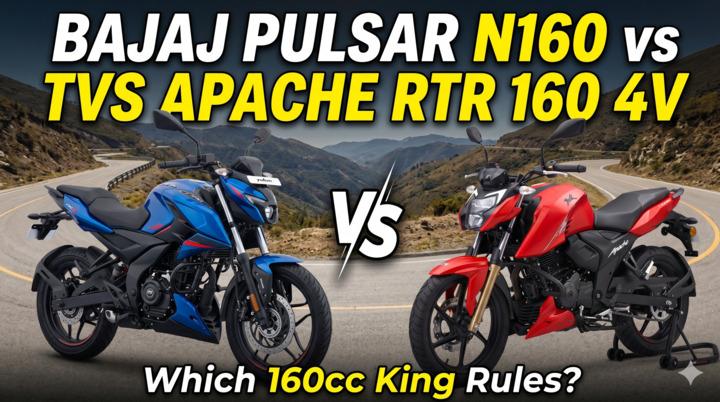
The 160cc segment is where many riders make the jump from a basic commuter to a bike with real character. Two names dominate the conversation here: the Bajaj Pulsar N160 and the TVS Apache RTR 160 4V.
Both are sporty, well-priced, and built for riders who want excitement without stepping up to a 200cc machine. But they chase that goal in different ways. This comparison breaks down how each one feels in daily use, on weekend rides, and over the long run, so you can decide which fits your riding style.
Note: All prices mentioned are approximate ex-showroom figures and vary by city, variant, and ongoing offers. Confirm the on-road price in your area before booking.
Key Highlights
- The Pulsar N160 uses a larger oil-cooled engine tuned for relaxed performance.
- The Apache RTR 160 4V feels sharper and offers riding modes on higher variants.
- Both bikes are priced close together at the base level.
- The Apache leans sporty; the Pulsar leans toward easygoing daily use.
- Service networks for both brands are wide and well established.
Price
The two bikes sit very close on price, and entry-level variants are nearly matched.
The base Pulsar N160 and the base Apache RTR 160 4V are separated by only a small margin at the ex-showroom level. As you move up the variant ladder, both climb into a higher bracket once you add features like a TFT display, upgraded brakes, or USD front forks.
Because the price gap is narrow, your decision should rest on the riding experience and the features you actually want, not on a couple of thousand rupees. Always check the on-road price for your city, since taxes and insurance shift the final figure.
You can compare the latest on-road prices before finalising either bike.
Engine & Performance
This is the heart of the comparison, and the two bikes have clearly different personalities.
The Pulsar N160 character
The Pulsar N160 runs a larger-displacement oil-cooled engine. It is tuned to feel strong and unstressed in the low and mid range, which makes it relaxing in city traffic and easy to ride at a steady pace. Power delivery is smooth rather than urgent, and that suits riders who want sportiness without constant effort.
The Apache RTR 160 4V character
The Apache RTR 160 4V is the more enthusiastic of the two. Its engine loves to be revved, and higher variants add selectable riding modes that change throttle response. It feels eager and sharp, rewarding riders who enjoy a more involved, energetic ride.
Which feels faster?
On paper, the Apache produces slightly higher peak power, while the Pulsar's larger engine delivers torque in a more accessible way. In real-world riding, the Apache feels livelier when pushed, and the Pulsar feels calmer and more effortless during everyday commuting.
Mileage & Running Cost
Fuel efficiency in this segment is reasonable but secondary to performance.
Both bikes return everyday mileage that is acceptable for a sporty 160cc commuter. Claimed figures differ between the two and across sources, and real mileage depends heavily on how hard you ride, traffic conditions, and load. Treat any single number as an estimate rather than a fixed promise.
In daily commuting, the running cost difference between the two is small. Service intervals and costs are broadly comparable, and both brands have enough authorised centres that maintenance is rarely a hassle.
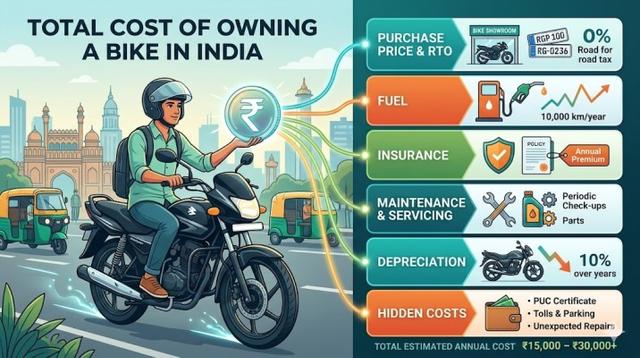
For a fuller view of long-term spending, it helps to look at the total cost of owning a bike rather than fuel alone.
Comfort & Practicality
A sporty bike still needs to work for daily use, and this is where the two diverge again.
Riding position
The Pulsar N160 has a slightly more upright, commuter-friendly posture. That makes it comfortable for longer stints and easier on the wrists and back during traffic crawls.
The Apache RTR 160 4V has a marginally sportier stance. It is still usable every day, but it leans toward an engaged riding feel rather than a fully relaxed one.
Suspension and ride quality
Both bikes handle Indian roads well. The Pulsar's setup is tuned to absorb bumps comfortably, while the Apache's suspension feels slightly firmer, which helps in corners but transmits a little more of a rough surface.
Pillion comfort and daily use
For two-up riding, both offer usable rear seats and grab support. The Pulsar's calmer ergonomics make it slightly more relaxing for a pillion on longer trips. For solo city commuting, both are easy to live with.
Braking confidence
Both bikes offer dependable braking. The Apache's higher variants are well equipped here, and the Pulsar offers multiple ABS settings on certain variants, which adds a layer of control and reassurance in mixed road conditions.
Features
Feature levels depend heavily on the variant you choose, so compare like-for-like trims.
The Apache RTR 160 4V's higher variants are feature-rich, with options such as a TFT display, Bluetooth connectivity, LED lighting, and riding modes. The Pulsar N160 counters with smartphone connectivity, a clear semi-digital cluster, and practical convenience features.
If having the latest tech matters to you, the top Apache variants make a strong case. If you want a clean, straightforward setup without paying for the top trim, a mid-spec Pulsar covers the basics well.
Comparison Summary
| Factor | Bajaj Pulsar N160 | TVS Apache RTR 160 4V |
|---|---|---|
| Engine character | Relaxed, torquey | Eager, rev-happy |
| Base price | Slightly lower or matched | Slightly higher or matched |
| City comfort | More upright, easygoing | Sporty, engaged |
| Highway feel | Planted, calm | Sharp, lively |
| Top-variant features | Practical, well-equipped | Feature-rich |
| Riding modes | Not the focus | Available on higher variants |
| Best suited to | Comfort-first sporty riders | Enthusiast riders |
Pros & Cons
Bajaj Pulsar N160
Pros:
- Relaxed, easy-to-use power delivery
- Comfortable, commuter-friendly posture
- Multiple ABS settings on select variants
- Strong brand familiarity and service reach
Cons:
- Less exciting for riders who enjoy revving
- Top-end feel is calmer than the Apache
TVS Apache RTR 160 4V
Pros:
- Sharp, energetic engine
- Riding modes on higher variants
- Feature-rich top trims
- Sporty handling and road presence
Cons:
- Firmer ride than the Pulsar
- Sportier posture is less relaxed for long commutes
Expert Verdict
Both bikes are excellent choices in the 160cc space, and neither is a wrong pick. The right one depends on the kind of rider you are.
Choose the Bajaj Pulsar N160 if you want a sporty-looking bike that stays comfortable and effortless during daily commuting. Its relaxed engine and upright posture make it the better all-rounder for riders who value ease over excitement.
Choose the TVS Apache RTR 160 4V if you enjoy an engaged, energetic ride and want a feature-rich machine with riding modes. It is the natural pick for enthusiasts who like to rev and ride actively.
A test ride settles it quickly. Ride both in traffic you know well, and notice which posture and engine character suits your routine.
Frequently Asked Questions
Which is cheaper, the Pulsar N160 or the Apache RTR 160 4V? The two are priced very close at the base level, with only a small gap. Prices vary by city and variant, so always compare on-road figures before deciding.
Which bike is better for daily commuting? The Pulsar N160 is slightly better for relaxed daily commuting thanks to its upright posture and easygoing engine. The Apache works well too, but feels sportier.
Which 160cc bike is more fun to ride? The Apache RTR 160 4V is generally the more enthusiastic, rev-happy choice, and its riding modes add to the experience. Riders who enjoy an active ride often prefer it.
Do both bikes get ABS? Both offer ABS depending on the variant. The Pulsar N160 provides multiple ABS settings on select variants, while the Apache is well equipped on its higher trims. Check the specific variant you plan to buy.
Which bike has better features? The higher Apache RTR 160 4V variants are more feature-rich, including options like a TFT display and connectivity. The Pulsar offers practical features but leans simpler.
Related reading: best 150cc bikes for daily use, how to choose your first bike, and best bike loan interest rates in India.