Monsoon Riding Tips for Indian Roads
By 91motorsJuly 8, 2026
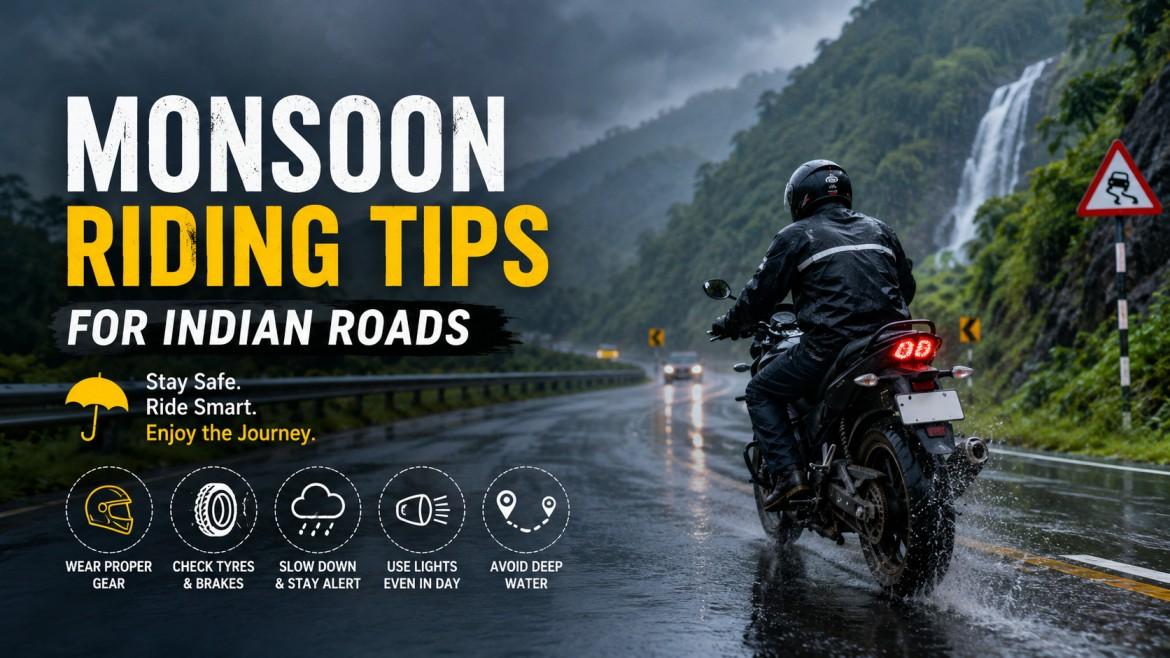
The monsoon transforms Indian roads. Wet surfaces, poor visibility, and unexpected hazards make riding more demanding. A few sensible monsoon riding tips can make the difference between a stressful, risky commute and a safe, confident one.
This guide covers practical advice for riding through the rains, from braking and visibility to tyres and bike care. The aim is to help you stay safe and comfortable when the roads turn wet.
Note: Conditions vary widely during the monsoon. These are general safety tips. Always ride according to the actual road and weather situation, and avoid riding in dangerous conditions.
Key Highlights
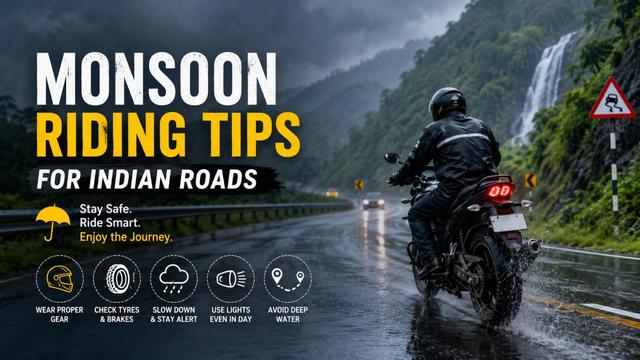
- Wet roads reduce grip, so ride smoothly and slower.
- Braking distances increase in the rain.
- Visibility, both yours and others', drops sharply.
- Good tyres and gear are essential.
- Avoid waterlogged stretches where possible.
Slow Down and Ride Smoothly
The single most important monsoon habit.
Wet roads offer far less grip than dry ones. Reduce your speed, and make all your inputs, acceleration, braking, and steering, smooth and gentle. Sudden movements are what cause skids on slippery surfaces.
A calm, unhurried riding style is your best protection in the rain.
Brake Early and Gently
Braking needs extra care when it is wet.
Stopping distances increase significantly on wet roads. Brake earlier than you normally would, and apply the brakes gently and progressively rather than grabbing them hard.
Anticipate stops well ahead so you never need to brake suddenly. Use both brakes in a smooth, balanced way.
Maintain Safe Distance
Give yourself room to react.
Because braking takes longer, keep a larger gap from the vehicle ahead. This extra space gives you time to respond to sudden stops, potholes, or hazards hidden by water.
A bigger following distance is simple and highly effective.
Watch Out for Hidden Hazards
Rain conceals dangers on the road.
- Potholes: Water can hide deep potholes. Be cautious through puddles.
- Oil and slippery patches: Roads can be especially slippery early in a rain spell. Painted markings and metal surfaces get slick.
- Waterlogging: Avoid riding through deep water, which can hide hazards and affect the bike.
Treat unfamiliar wet stretches with extra caution.
Improve Your Visibility
Seeing and being seen both get harder.
Rain and spray reduce visibility for everyone. Keep your headlight on, wear bright or visible gear, and use a clear, clean visor. Wipe your visor and mirrors as needed.
Position yourself where other road users can see you, and avoid blind spots of larger vehicles.
Check Your Tyres
Tyres are your contact with a slippery road.
Good tyre tread is essential for grip and water dispersal in the wet. Worn tyres are dangerous during the monsoon. Check tread condition and maintain correct tyre pressure.
If your tyres are worn, replacing them before the monsoon is a wise safety investment.
Wear the Right Gear
Comfort and safety go together.
- Always wear a good helmet with a clear visor.
- Use a proper raincoat or waterproof riding gear.
- Choose gear that keeps you visible.
- Avoid loose clothing that can be a hazard.
Staying dry also helps you stay focused and comfortable.
Take Care of Your Bike
The monsoon is hard on bikes too.
- Keep the chain clean and lubricated, where applicable, as rain washes off lubrication.
- Check that lights and indicators work properly.
- Watch for any electrical or starting issues.
- Clean the bike to prevent rust and grime buildup.
Know When Not to Ride
Sometimes the safest choice is to wait.
In very heavy rain, severe waterlogging, or dangerous conditions, it is wiser to delay your journey or choose another option. No commute is worth a serious risk.
Verdict
Safe monsoon riding is mostly about caution and smoothness. Slow down, brake early and gently, keep extra distance, and stay alert for hidden hazards.
Back this up with good tyres, proper gear, strong visibility, and a well-maintained bike. And when conditions become genuinely dangerous, do not hesitate to wait it out.
Ride calm, ride aware, and the monsoon becomes manageable rather than frightening.
Frequently Asked Questions
How should I ride on wet roads? Ride slower and keep all inputs smooth. Gentle acceleration, braking, and steering prevent skids on low-grip wet surfaces.
Why are roads slippery when it starts raining? Early in a rain spell, oil and grime on the road mix with water, making surfaces especially slippery. Painted markings and metal also get slick.
How does braking change in the monsoon? Stopping distances increase. Brake earlier and more gently, anticipate stops, and use both brakes in a smooth, balanced way.
Are good tyres important for monsoon riding? Yes. Good tread provides grip and disperses water. Worn tyres are dangerous in the wet, so check and replace them if needed.
Should I ride through waterlogged roads? Avoid deep water where possible. It can hide hazards and affect the bike. In severe conditions, it is safer to delay the journey.
Related reading: bike service schedule guide, how to choose your first bike, and best bikes for Mumbai traffic.