Two-Wheeler Insurance Explained: Types & Coverage
By 91motorsJuly 8, 2026
Insurance is an essential part of owning a bike, yet many riders are unclear about what their policy actually covers. Understanding two-wheeler insurance types helps you choose proper protection instead of just meeting a legal requirement.
This guide explains the main types of bike insurance, what each covers, common add-ons, and how to pick the right policy. The aim is to make insurance simple and clear so you can ride with genuine peace of mind.
Note: Insurance terms, coverage, and rules vary by insurer and policy. This is general guidance, so always read your specific policy document carefully.
Key Highlights
- There are two main types of two-wheeler insurance.
- Third-party insurance is the legal minimum.
- Comprehensive insurance offers much wider protection.
- Add-ons can enhance a comprehensive policy.
- The right choice depends on your bike and needs.
Why Insurance Matters
Insurance protects both you and others.
A valid policy is legally required to ride. It also shields you from potentially large financial costs in the event of an accident, theft, or damage. The right policy turns an unexpected event from a financial shock into a manageable claim.
Understanding the types helps you choose a policy that genuinely fits your situation.
Type 1: Third-Party Insurance
This is the basic, mandatory cover.
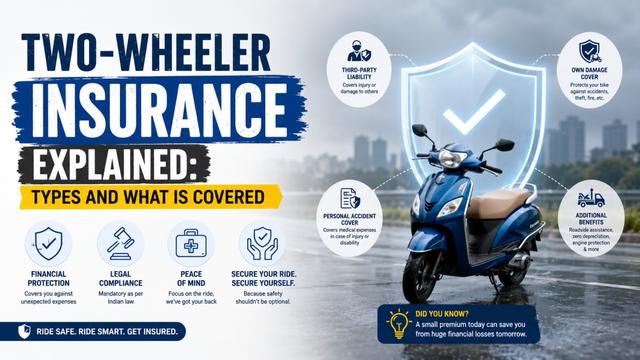
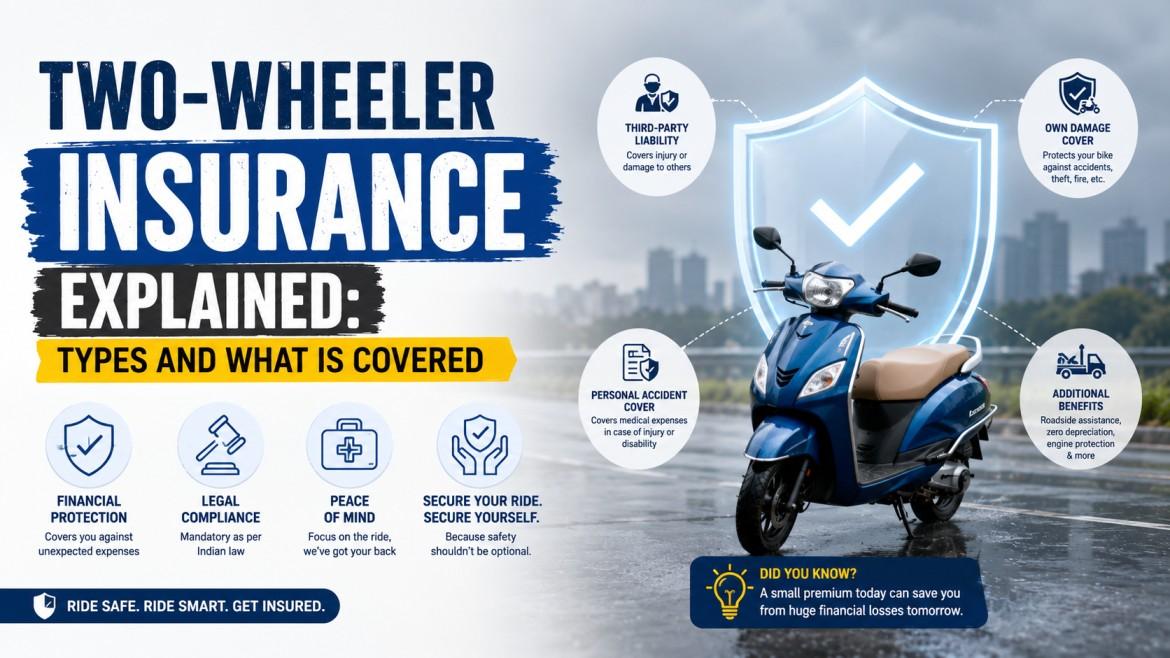
Third-party insurance covers your legal liability for damage or injury you cause to other people, their vehicles, or their property. It is the minimum required by law to ride.
Its key limitation is important: it does not cover damage to your own bike. If your bike is damaged or stolen, a third-party policy will not help with that.
This option has a lower premium and suits riders who want only the legal minimum, often those with older or lower-value bikes.
Type 2: Comprehensive Insurance
This offers much broader protection.
Comprehensive insurance includes third-party liability and adds cover for damage to your own bike. This typically covers accidents, theft, fire, and natural or man-made calamities, depending on the policy.
It costs more than third-party insurance, but it provides far greater peace of mind. For a new or higher-value bike, comprehensive cover is usually the sensible choice.
Key Components of a Policy
A few terms are worth knowing.
Insured declared value
This is the value your bike is insured for under a comprehensive policy. It influences the premium and the claim amount.
Premium
This is what you pay for the policy. It depends on the coverage type, bike value, and other factors.
Deductible
This is the portion of a claim you pay yourself. A policy may have a compulsory deductible.
Exclusions
These are situations the policy does not cover. Reading them avoids surprises at claim time.
Common Add-On Covers
Add-ons let you customise a comprehensive policy.
Depending on the insurer, optional add-ons may enhance your protection in specific situations. They increase the premium, so it is worth deciding which ones genuinely add value for your usage. Always check exactly what each add-on includes.
How to Choose the Right Policy
Match the policy to your situation.
- New or valuable bike: Comprehensive cover is usually worth the higher premium.
- Older, lower-value bike: Third-party may be sufficient, though comprehensive still adds protection.
- Your risk comfort: If you want maximum protection, comprehensive is the safer choice.
- Budget: Balance premium cost against the protection you actually want.
It also helps to know how to check bike insurance carefully before accepting any policy.
Keeping Your Policy Valid
A policy only helps if it is active.
- Renew your policy before it expires to avoid a lapse.
- Keep the policy document accessible while riding.
- Update the insurer if you transfer ownership of the bike.
- Understand the claim process before you ever need it.
Verdict
Understanding two-wheeler insurance types makes a confusing topic simple. Third-party insurance is the legal minimum and covers damage to others. Comprehensive insurance adds protection for your own bike and offers far greater peace of mind.
Choose based on your bike's value, your budget, and how much protection you want. For a new or valuable bike, comprehensive cover is usually the wiser choice.
Read your policy, understand the coverage, and keep it valid. That is the foundation of stress-free ownership.
Frequently Asked Questions
What are the types of two-wheeler insurance? The two main types are third-party insurance, the legal minimum, and comprehensive insurance, which offers wider protection including your own bike.
Does third-party insurance cover my own bike? No. Third-party insurance only covers damage or injury you cause to others. It does not cover damage to or theft of your own bike.
Is comprehensive insurance worth it? For a new or higher-value bike, comprehensive insurance is usually worth the higher premium, as it covers accidents, theft, and damage to your bike.
What is a deductible in bike insurance? A deductible is the portion of a claim you pay yourself. Policies may include a compulsory deductible amount.
What are add-on covers? Add-ons are optional covers that enhance a comprehensive policy for specific situations. They increase the premium, so choose ones that add real value.
Related reading: how to check bike insurance before buying, documents required to buy a two-wheeler in India, and how to transfer bike ownership.